Developed by MolSoft in Collaboration with Medicinal Chemists at Novartis.
Introduction
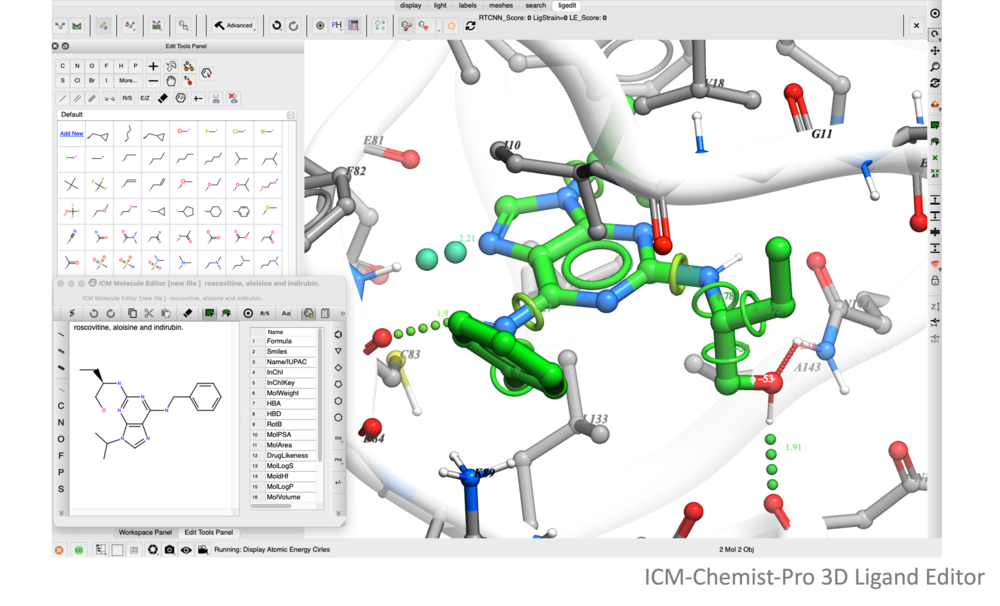
The ICM Ligand Editor is an intuitive graphical interface for ligand optimization and drug design. The editor was developed in close collaboration with Medicinal Chemists at Novartis and designed for ease of use and high accuracy ligand modeling. The ligand editor is available in ICM-Pro and ICM-Chemist-Pro.
A ligand can be modified in 2D or 3D and the effects of the modification can be seen on the binding energy to the receptor. For example a substituent can be changed with a single click on the screen and a calculation of the ligand binding score is made on the fly. The changes are stored and full undo and redo options are available and if the chemist likes the change they can tag and save the ligand in a chemical spreadsheet. Predictions are powered by MolSoft's high accurate docking ICM docking software. A wide set of tools are available for constrained docking using tethers and distance restraints as well as fragment and covalent docking. There are options for explicit flexible side-chains and multiple receptor docking to account for induced fit. The ligand editor can also be used for 3D pharmacophore ligand design using Atomic Property Fields.
Key Features
Ligand Editing
Ligand editing is a key step in structure-based drug design, enabling the optimization of molecular structures for better binding affinity, selectivity, and drug-like properties. Small modifications, such as fragment replacements or scaffold changes, can have a significant impact on activity. Precise editing tools allow researchers to explore structure-activity relationships and refine hits into viable leads.
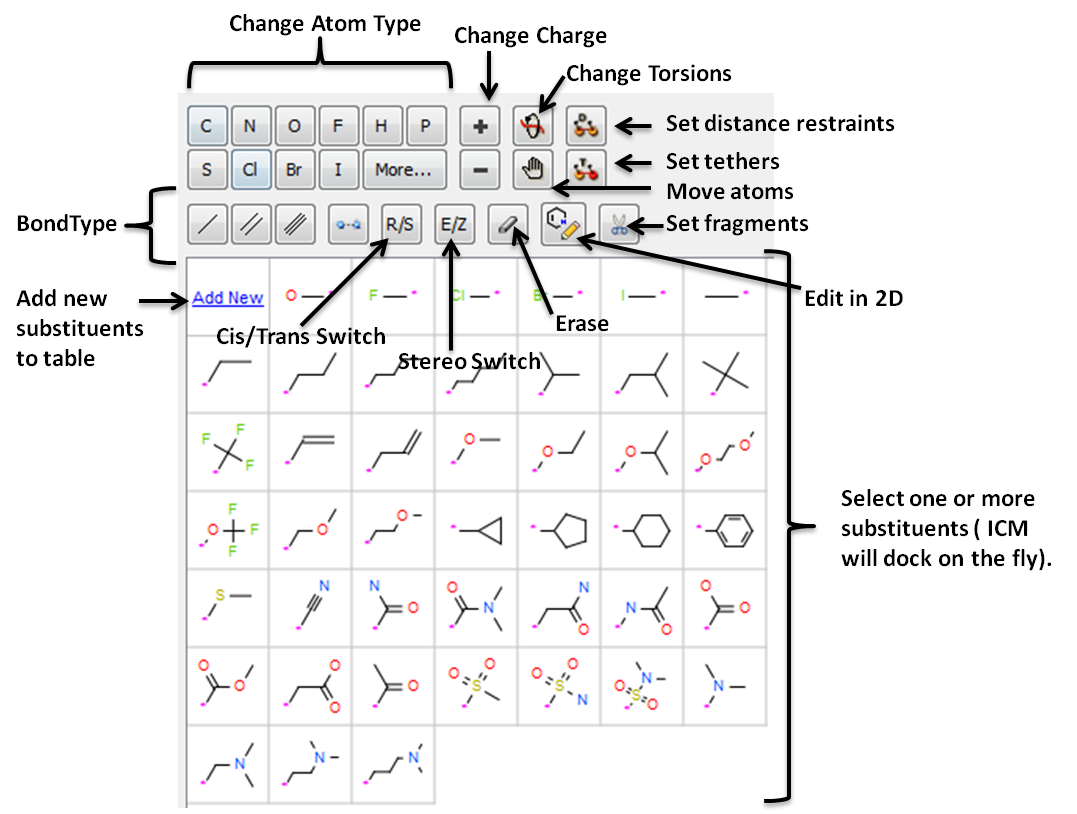
- Interactively edit a ligand bound to a receptor in 2D or 3D and see the effect on ligand binding.
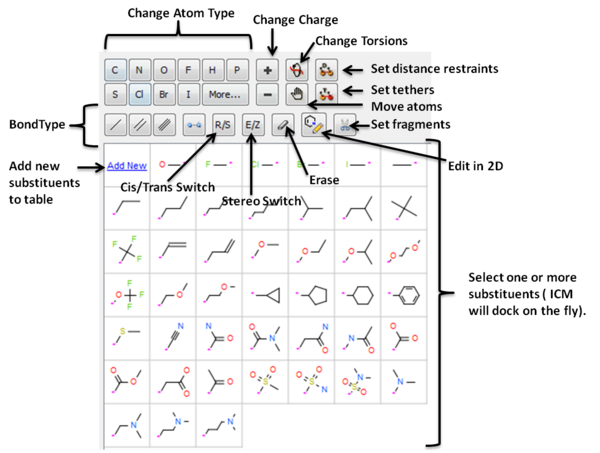
- Change atom and bond types with a single click
- Switch stereo, cis and trans.
- Delete atoms and bonds.
- Rotate torsion angles.
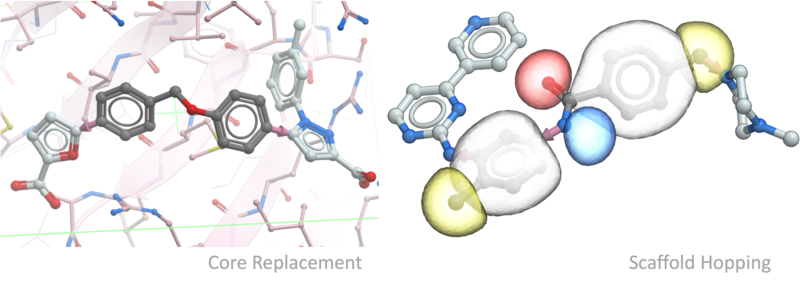
- Sample one or more substituents at defined points around the ligand.
- Screen a database of substituents to a specific atom of a ligand - Fast virtual docking and scoring of replacement groups.
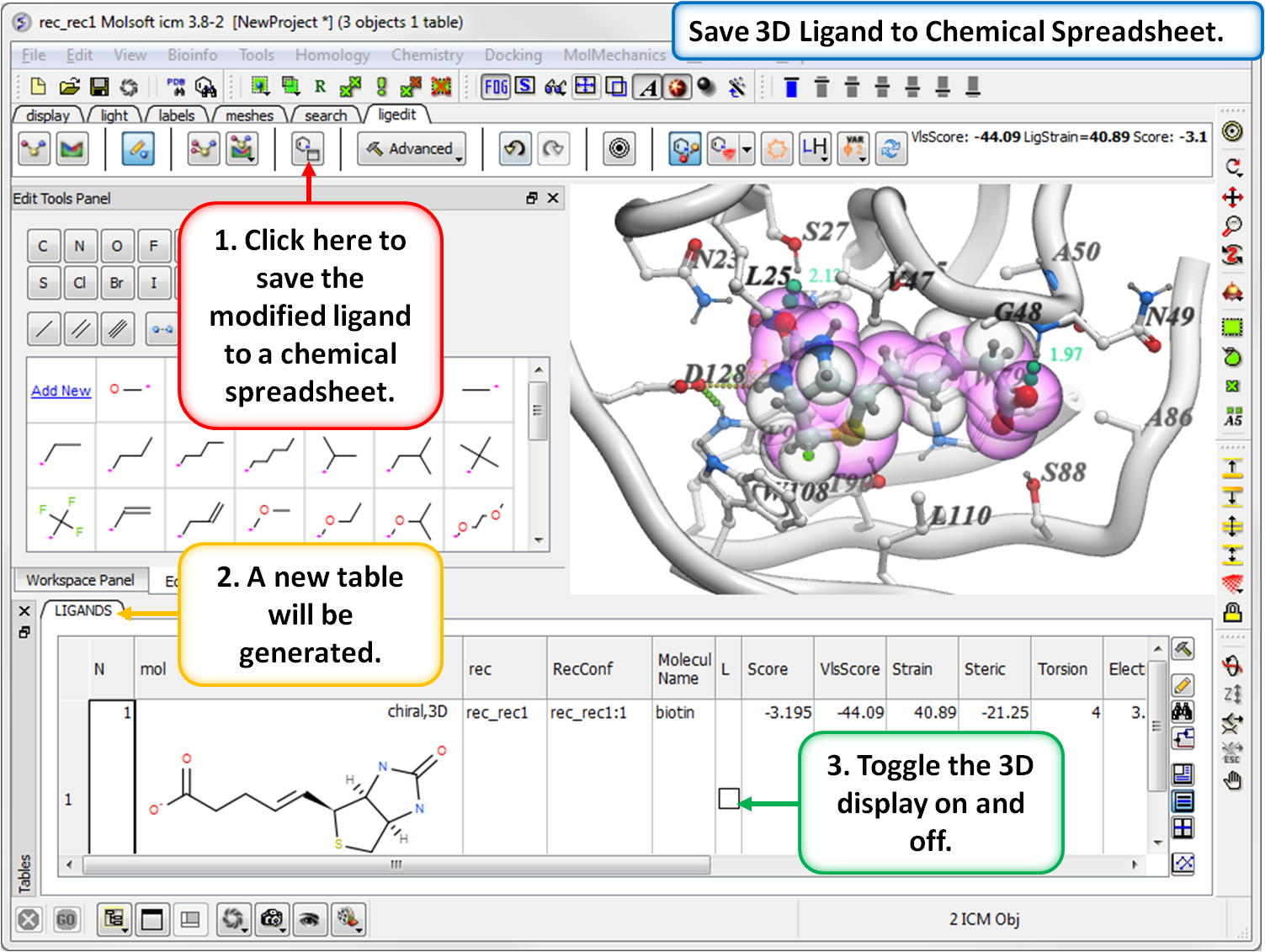
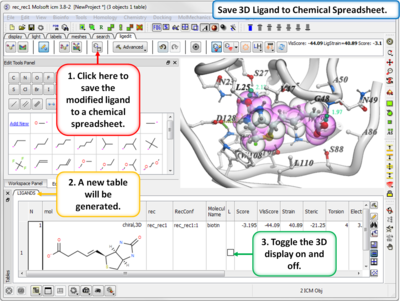
- Modification history table: Every ligand modification is stored and recorded in a chemical spreadsheet. Double click on the spreadsheet to view the change.
- Hetero atom scan around ligand: This option allows you to scan groups and hetero atoms at multiple locations on the ligand.
- R-group scan around ligand: This option allows you to scan groups and hetero atoms at multiple locations on the ligand.
- Fast core replacement and linker screening.
- Convenient undo and redo modification feature.
- Save new ligands in chemical spreadsheet export to Excel, SDF, Mol or PDB format.
- Modification history table: Every ligand modification is stored and recorded in a chemical spreadsheet. Double-click on the spreadsheet to view the change.
Docking and Minimization
Docking and minimization help refine ligand interactions within the binding site, making them essential tools in the 3D ligand editor. Docking provides an initial pose prediction, while minimization optimizes the ligand's conformation by resolving clashes and improving complementarity with the protein. These steps enhance the accuracy of ligand modifications, ensuring structural changes lead to meaningful improvements in binding.
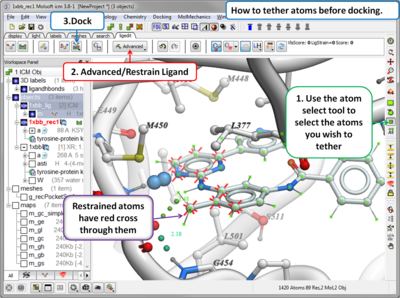
- Dock or Minimize a ligand inside a ligand binding pocket
- Calculate docking score and strain
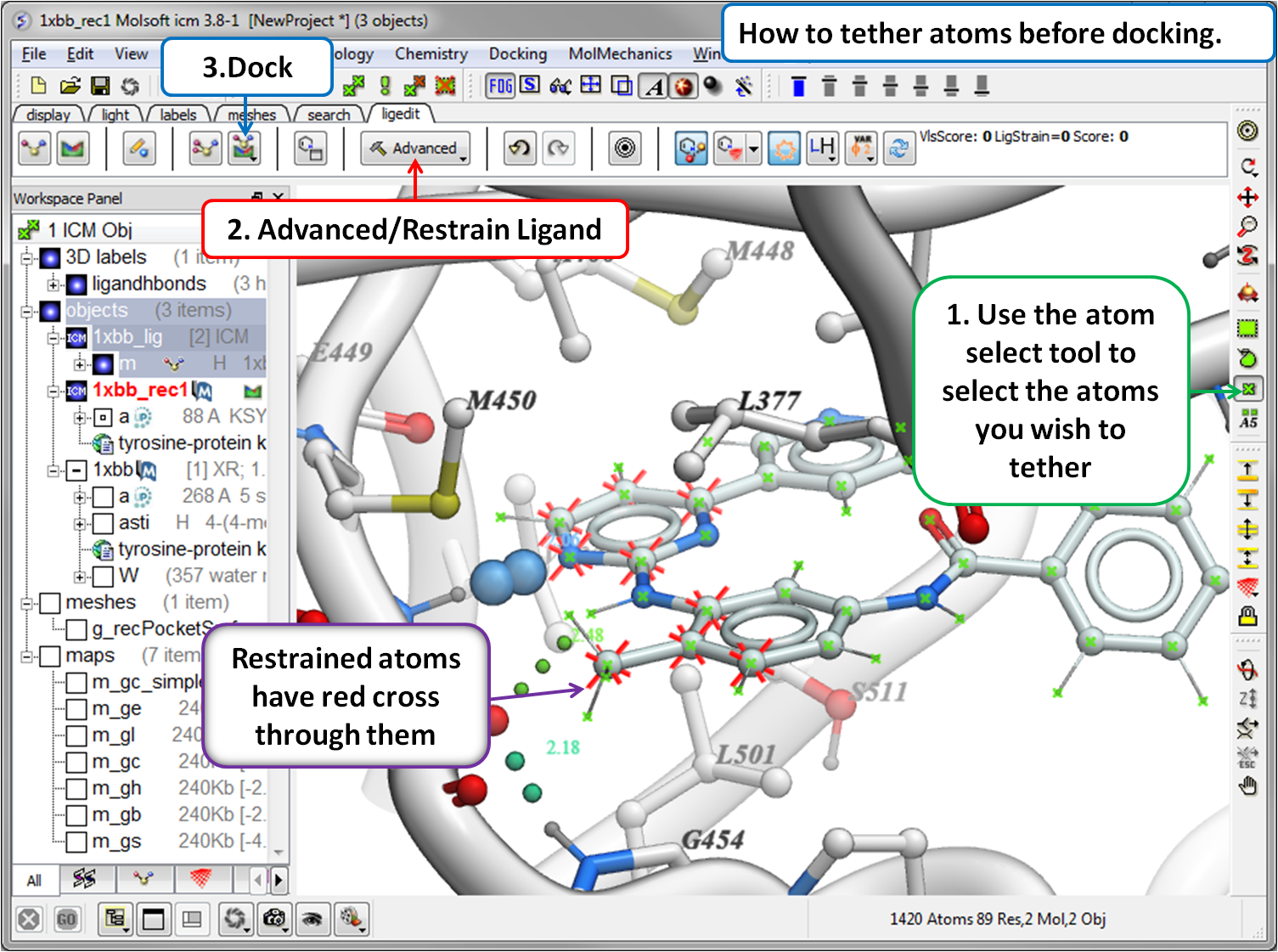
- Dock using tethers and distance restraints
- Dock allowing specific residues in the receptor to be flexible
- Display hydrogen bonds, binding pocket, unsatisfied hydrogen bonds, and atomic energy circles
- On the fly docking and scoring of replacement groups
- Fragment docking
- 4D docking for induced fit
- Covalent docking.
- Ligand-based dockign to APF 3D pharmacophore
Receptor-Ligand Interactions
Understanding receptor-ligand interactions is crucial for effective ligand modification in the 3D ligand editor. Visualizing key contacts, such as hydrogen bonds, hydrophobic interactions, and steric clashes, helps guide structural refinements to enhance binding affinity and specificity. Identifying these interactions allows for more informed ligand edits, improving the chances of designing a potent and selective compound.
- Display hydrogen bonds
- Display receptor binding pocket surface
- Display ligand binding pocket surface
- Display unsatisfied hydrogen bonds
- Display atomic energy circles
- Display relaxed ligand
- One click 2D interaction diagram: This option creates a 2D interaction map between the ligand and receptor.
- Simple way to analyze ligand-receptor contacts.
Case Studies - How the ICM-Pro 3D Ligand Editor (LigEdit) Guided the Discovery of Next-Generation WEE1 Kinase Inhibitors
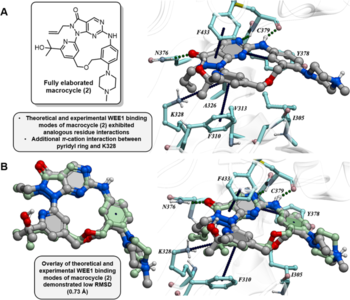
The interactive ICM Ligand Editor (LigEdit) is a powerful desktop environment developed in collaboration with medicinal chemists to enable real-time 3D ligand design, editing, and physics-based redocking directly within a target's binding pocket. The chemist can make modifications interactively or in batch and get instantaneous feedback on binding scores, pocket complementarity, and molecular strain.
Case Study 1: Rational de Novo Design of Selective Macrocyclic WEE1 Inhibitors
Publication
Authors:
Joel L. Syphers, Josephine A. Wright, Adarsh Kumar, Nikos To, Lewis Elson,
Andreas Krämer, Susanne Müller, Viktoria Morasch, Aeson Chang, Savannah Young,
Erica K. Sloan, Rebekah de Nys, Tharindie N. Silva, Laura Vrbanac, Kate R. Barratt,
Julia Leeflang, Sadia T. Hasan, Robert W. Gable, Stefan Knapp, Daniel L. Worthley,
Siddhartha Mukherjee, Kieran Stockton, Susan L. Woods, Daniel L. Priebbenow,
and Jonathan B. Baell
Paper Link:
Selective Macrocyclic WEE1 Kinase Inhibitors with Strong Efficacy against Patient-Derived Colorectal Cancer Organoids
The Challenge
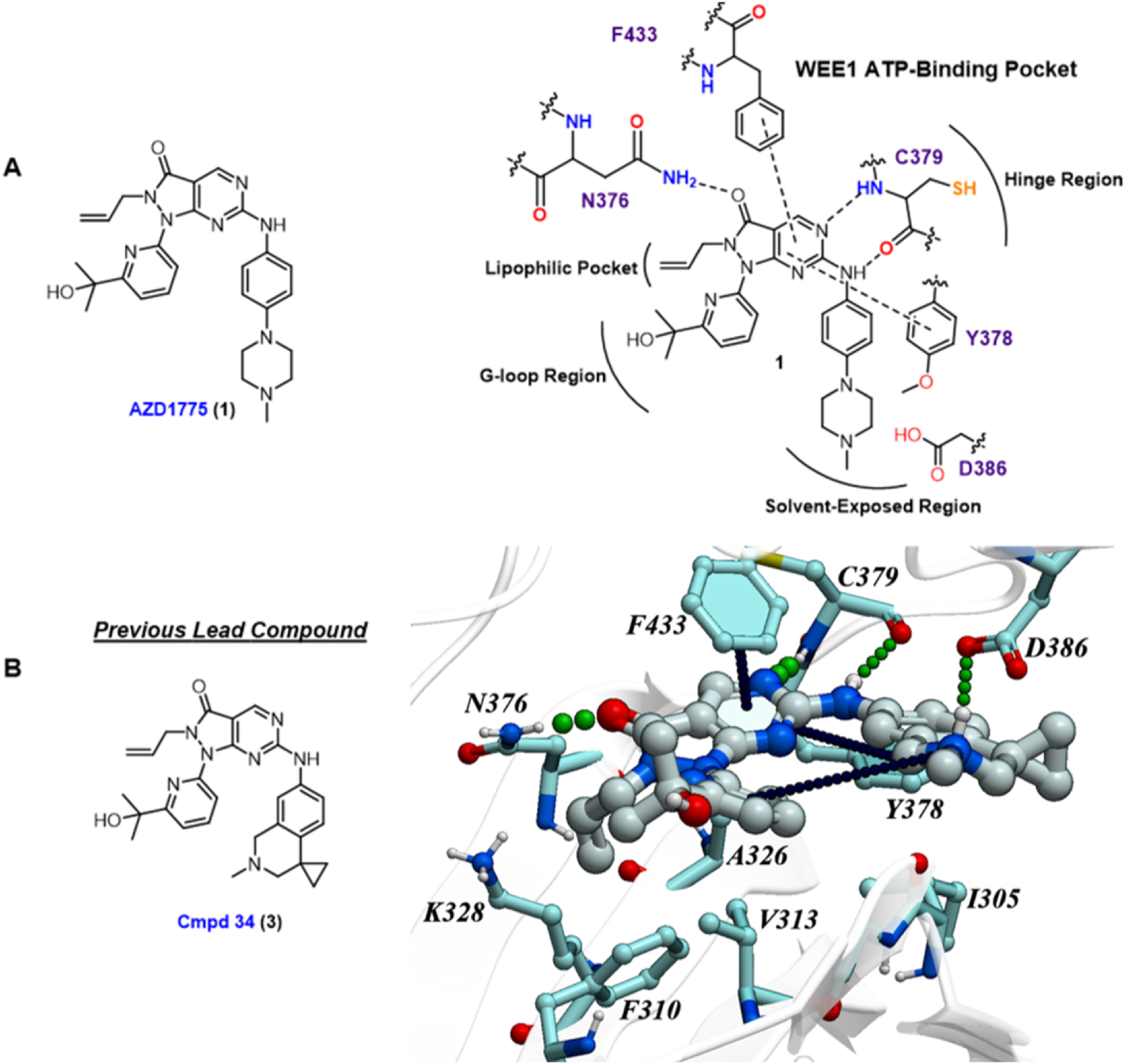
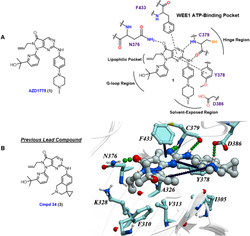
Targeting the highly conserved ATP-binding pocket of WEE1 kinase often leads to off-target toxicities. For instance, the clinical progress of the acyclic candidate AZD1775 (1) was severely limited by patient tolerability issues linked directly to its off-target, equipotent inhibition of polo-like kinase 1 (PLK1).
The 3D Ligand Editor Solution
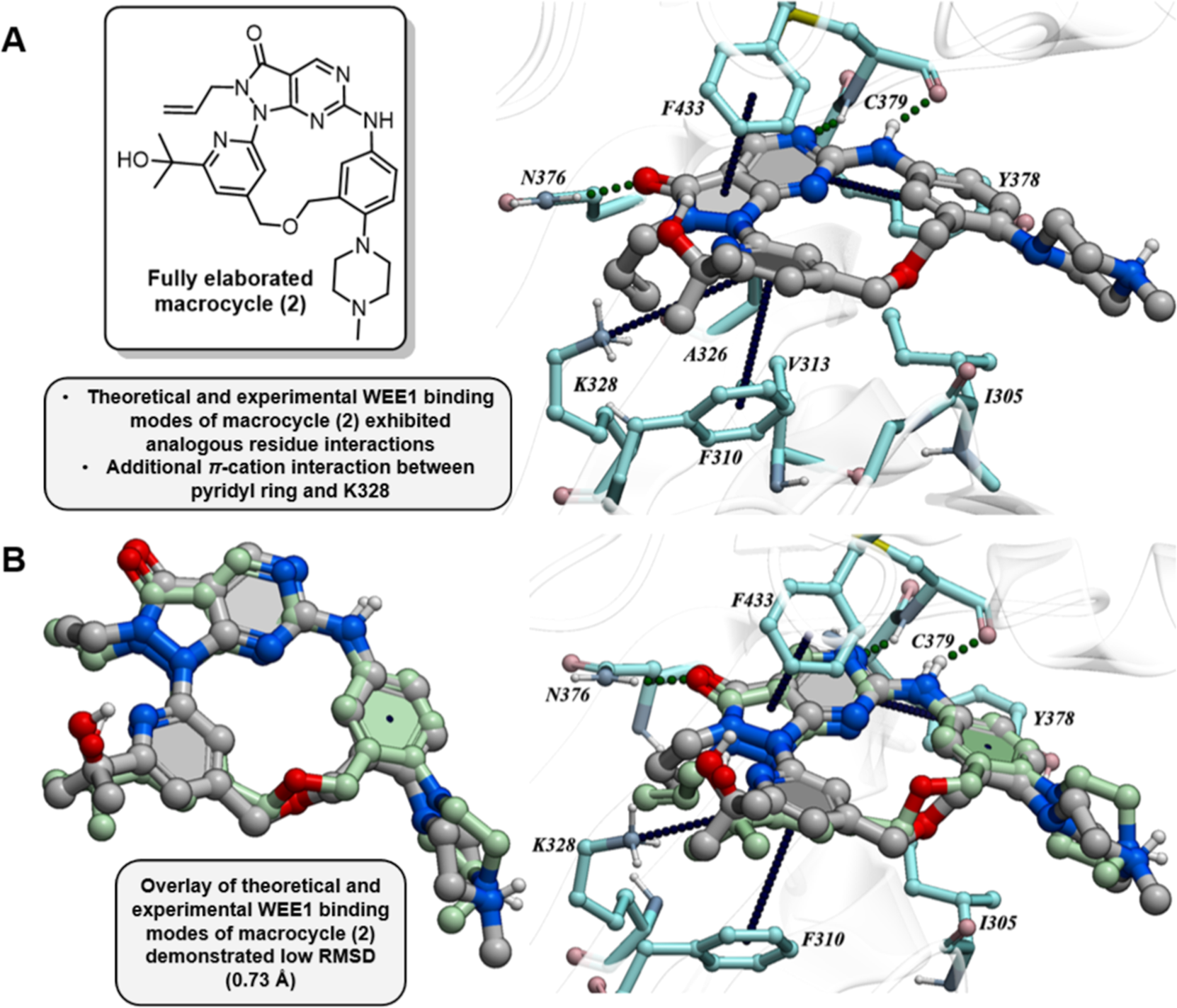
Using the interactive 3D Ligand Editor in ICM-Pro, researchers analyzed the U-shaped binding conformation of AZD1775 bound within WEE1 (PDB ID: 5V5Y). They utilized LigEdit to apply interactive de novo design, strategically engineering a three-atom ethereal linker to bridge the molecule's pyridyl and phenyl rings [9, 10]. This macrocyclization pre-locked the drug into its active conformation, significantly reducing the entropic penalty of binding and geometrically preventing unwanted interactions with off-target kinases like PLK1.
Validation & Results
- Near-Atomic Structural Validation: When the experimental X-ray cocrystal structure of the synthesized macrocycle bound to WEE1 (PDB ID: 9R55) was solved and superimposed onto the computational model generated in LigEdit, they aligned with an extraordinary RMSD of just 0.73 Å.
- Enhanced Selectivity: The designed macrocycle achieved a >10-fold increase in selectivity for WEE1 over PLK1 compared to AZD1775.
- Translational Efficacy: The macrocycle demonstrated potent, selective cell-killing activity in patient-derived metastatic colorectal cancer organoids.
Case Study 2: Side-Chain Spiro-Rigidification and the Discovery of APO-50815
Publication
Authors:
Joel L. Syphers, Josephine A. Wright, Rebekah de Nys, Tharindie N. Silva, Laura Vrbanac,
Kate R. Barratt, Julia Leeflang, Sadia T. Hasan, Sophie F. Thomson, Adarsh Kumar,
Andreas Krämer, Christopher Lenz, Yi Sing Gee, Aeson Chang, Savannah Young,
Erica K. Sloan, Stefan Knapp, Daniel L. Worthley, Siddhartha Mukherjee, Kieran Stockton,
Daniel L. Priebbenow, Susan L. Woods, and Jonathan B. Baell
Paper Link:
Discovery of APO-50815, a potent WEE1 kinase inhibitor with exceptional efficacy against patient-derived colorectal cancer organoids
The Challenge
Colorectal cancer (CRC) tumors carrying mutated TP53 are highly dependent on the G2/M cell cycle checkpoint regulated by WEE1. Achieving therapeutic levels of WEE1 inhibition while maintaining a high safety window for healthy tissues requires compounds with extreme cellular potency and selective target engagement.
The 3D Ligand Editor Solution
Researchers used the 3D Ligand Editor to systematically modify the solvent-exposed tail of the pyrimidinylpyrazolone scaffold. By replacing the flexible N-methyl piperazine of AZD1775 with a spiro-cyclopropyl tetrahydroisoquinoline (THIQ) group, they initiated real-time redocking and minimization in the simulated active site. LigEdit immediately revealed that the newly introduced THIQ ammonium group formed a critical, highly favorable salt bridge with Aspartate 386 (D386) alongside an intramolecular cation–π stabilization interaction with the adjacent pyridyl ring. Further rigidification of the branched alkane group to a thietane-3-ol ring yielded the leading inhibitor, APO-50815 (14).
Validation & Results
- Impressive Biochemical Potency: APO-50815 emerged as an incredibly potent lead with a biochemical WEE1 IC50 of 9 nM [4, 23].
- Outstanding Safety Window: When tested against primary colorectal tumors versus patient-matched normal healthy colon tissues, APO-50815 displayed selectively potent anticancer activity, yielding exceptional Therapeutic Indices (TI) of 129 to 238.
- Superior Mechanism of Action: In patient-derived organoids (PDOs), APO-50815 profoundly elevated DNA damage (γH2AX accumulation), replication stress, and apoptosis, significantly outperforming prior clinical comparators.

 Ligand editing is a key step in structure-based drug design, enabling the optimization of molecular structures for better binding affinity, selectivity, and drug-like properties. Small modifications, such as fragment replacements or scaffold changes, can have a significant impact on activity. Precise editing tools allow researchers to explore structure-activity relationships and refine hits into viable leads.